ChinkiZ Knitting Knife
Shopify and Webflow fought the way her audience shops. A custom-coded storefront puts the video right next to the buy button.
- Client
- ChinkiZ Knitting Knife
- Location
- India
- Sector
- D2C · Creator
- Year
- 2024
- Stack
- Next.js · Razorpay
- Scope
- Creator storefront, video gallery, admin

The brief
A creator with 600K+ YouTube subscribers needed to sell handmade products directly. Two previous builders had failed.
The build
- 01Native video gallery matching the ritual of her tutorials
- 02Razorpay payments
- 03Self-serve admin — add a product like uploading a video
- 04No Shopify, no theme marketplace
The result
“I did not think it could be achieved without going to e-commerce builders and only using custom code.”
The notes
- 01
What we shipped
A storefront that feels like her tutorials
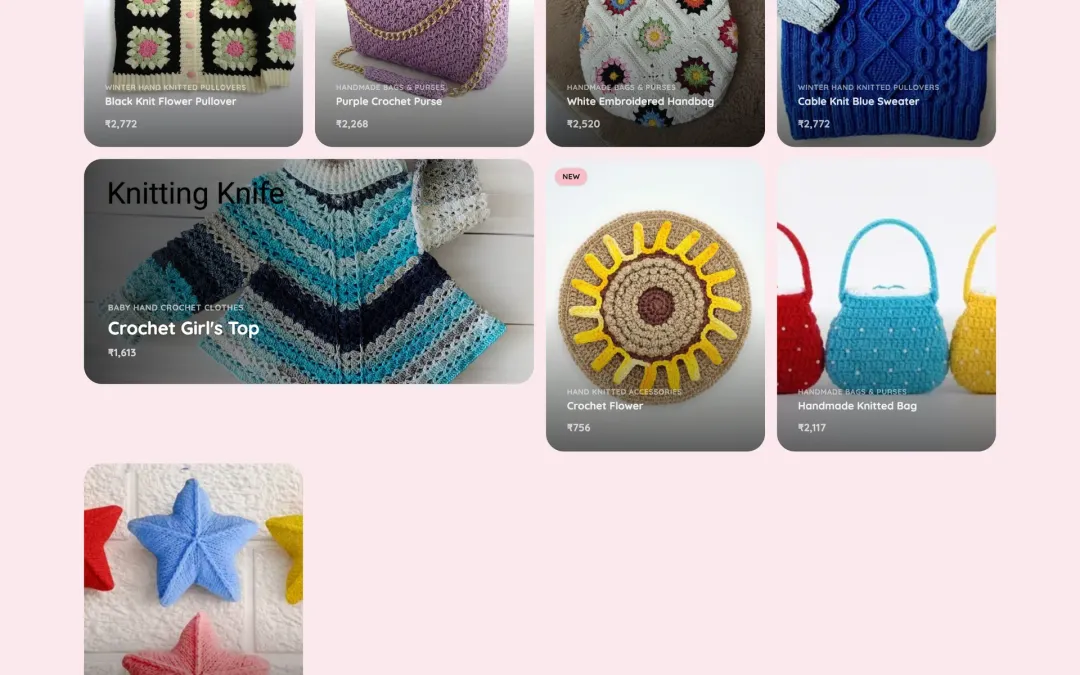
A custom Next.js storefront with Razorpay, a video gallery mirroring her YouTube grid, and an admin panel where she adds products the way she'd add a video — title, thumbnail, done. Zero Shopify themes, zero builder lock-in, full code ownership.
- 02
The result
The store finally shops the way her audience does
Two e-commerce builders had already failed at the same job, because both wanted the video to be a tab and the product to be a row in a grid. Here the demo sits beside the buy button, which is the actual sequence her viewers follow — watch, decide, buy. She publishes new products herself, in two weeks from brief to live, and owns the code outright.
- 03
Why not Shopify
A catalogue can't carry a creator
Chinki's audience knows her through tutorials: twenty-minute videos of her hands working through a pattern. A theme built around a photo, a price and an Add to Cart button misses the reason anyone buys from her. So the store puts the tutorial next to the buy button, keeps checkout to UPI and cash on delivery with one tap to WhatsApp, is designed for the phone her audience watches on, and runs on infrastructure she owns rather than rents.
- 04
The lesson
A creator's storefront is not a catalogue with videos added. It is the video, with a way to buy attached — and that ordering is exactly what off-the-shelf builders fight you on.
Gallery
Questions I get.
ChinkiZ Knitting Knife is a direct-to-consumer storefront built by Divyansh Sood Studio for Chinki, a creator with a 600K+ subscriber YouTube channel. The site puts her tutorial videos next to the buy button.
No. It is fully custom-coded in Next.js with Razorpay payments — zero Shopify themes and zero builder lock-in, so the owner keeps full code ownership.
A custom admin panel lets her add a product the way she'd add a video — title, thumbnail, done — with a video gallery that mirrors her YouTube grid.
Content and commerce on the same screen, because the tutorials are why people buy. It also needs to be mobile-first, have a simple checkout (UPI, cash on delivery, WhatsApp for questions), look and feel continuous with the channel, and run on infrastructure the creator owns.
