WebSeek.ai
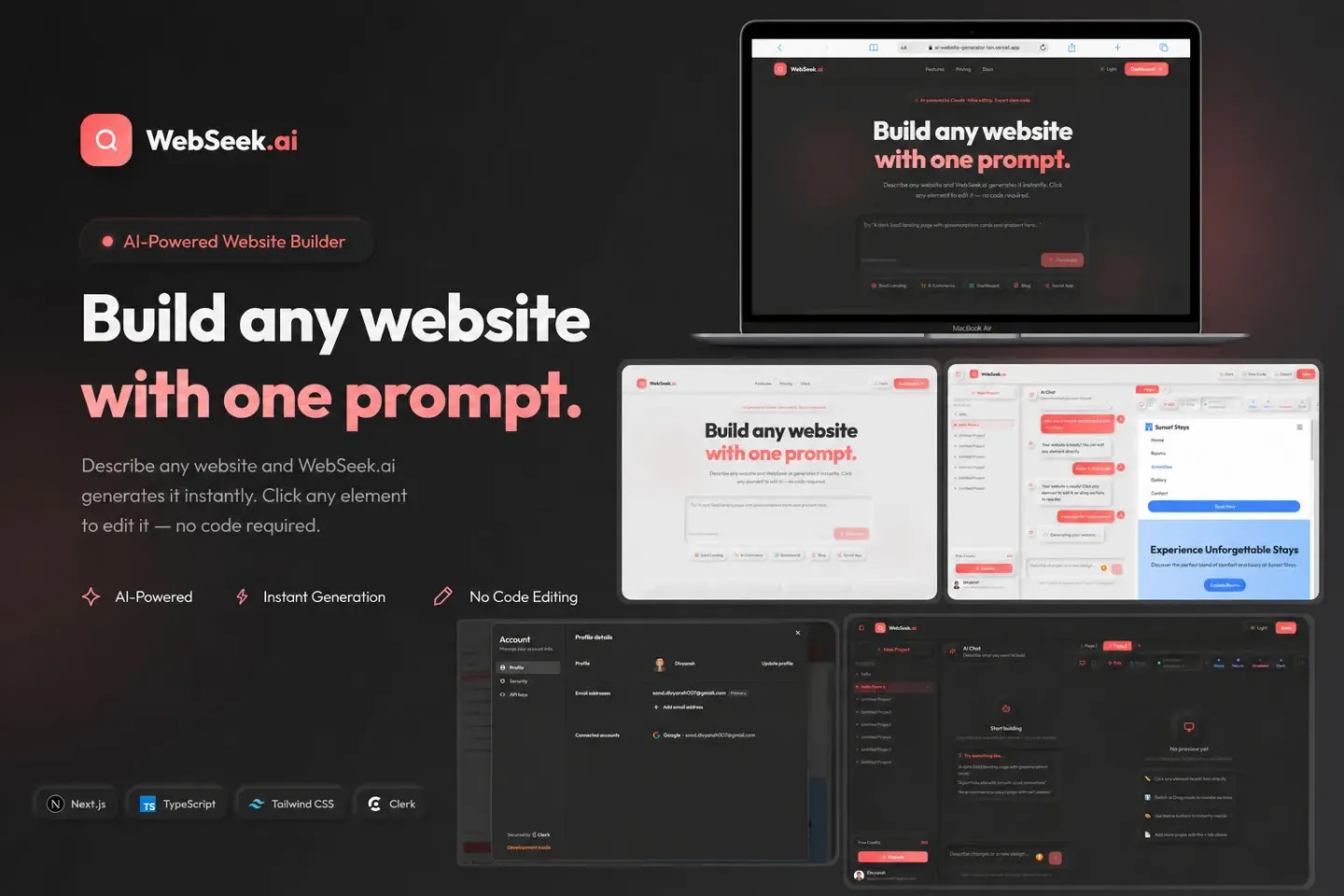
One prompt to a deployed, custom-coded site — running on Claude, GPT and Gemini in production behind one picker.
- Client
- WebSeek.ai
- Location
- Worldwide
- Sector
- AI · Product
- Year
- 2026
- Stack
- React · Tailwind · Claude · GPT · Gemini
- Scope
- Own product — AI website generator
The brief
The studio's bet on where agencies go next: one credit, one prompt, any input language, and a working site the user owns.
The build
- 01Three model providers in production
- 02Output is HTML the user owns
- 03Any input language
- 04Live beta with five free credits
The result
The notes
- 01
The bet
Custom output, not block-assembled templates
Most "AI website builders" produce identical, sectioned-template marketing pages. We built the opposite: custom-coded output, plus a model picker — Claude for taste, GPT for breadth, Gemini for speed.
- 02
Audience
- SMEs without a developer
- Designers wanting a draft fast
- Our own studio — dog food
- 03
The result
Three providers in production, behind one prompt bar
WebSeek runs Claude, GPT and Gemini side by side in a live product, not a demo — which means the differences between them are something I've had to handle in production: prompt shapes that work on one and not another, failure modes, cost and latency trade-offs. That experience is the reason AI features on client projects are reused code rather than an experiment billed to the client. The product is in active iteration and the output stays ownable HTML.
- 04
The lesson
Running your own product changes how you scope other people's. Every estimate I give now comes from having paid the cost of being wrong on something I owned.
Gallery
Questions I get.
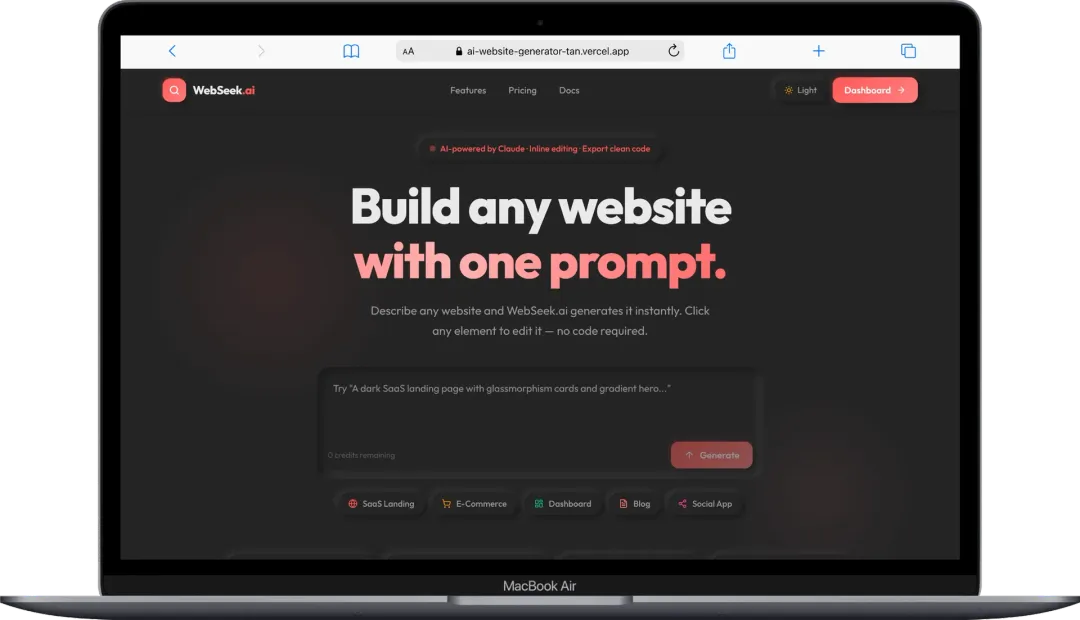
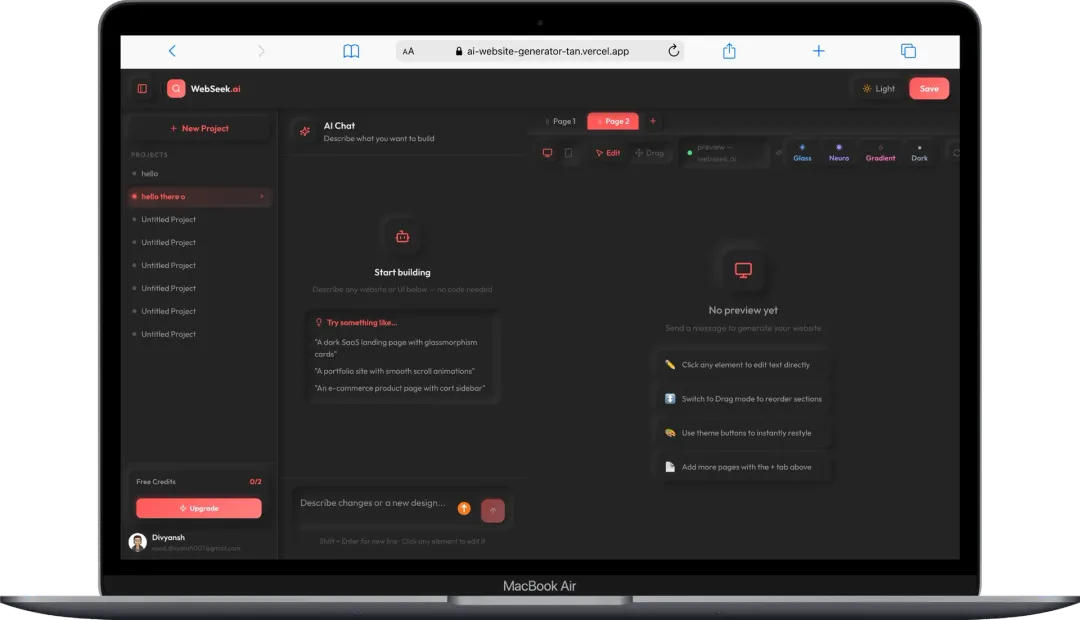
WebSeek.ai is an AI website generator built by Divyansh Sood Studio. You give it one prompt in any language and it returns a custom-coded website, with a model picker for Claude, GPT or Gemini.
Yes — every new user gets 5 free credits while the product is in active iteration. The output is ownable HTML, not locked inside a SaaS editor.
React and Tailwind on the front end, with the Anthropic, OpenAI and Google AI SDKs powering the generation.